

WATERPROOFING SYSTEMS
AND THE TRUSTED PRODUCT COMPANIES
USED BY AAA MOUNTAIN WATERPROOFING, LLC
AAA Mountain Waterproofing is recognized as the leading waterproofing contractor in Colorado.
Their success comes from combining high-quality, industry-leading products with a team of highly qualified professionals who are trained to design and install the best waterproofing systems for Colorado’s unique climate. This expertise ensures durable, reliable protection for every project, no matter the conditions
AIR BARRIERS
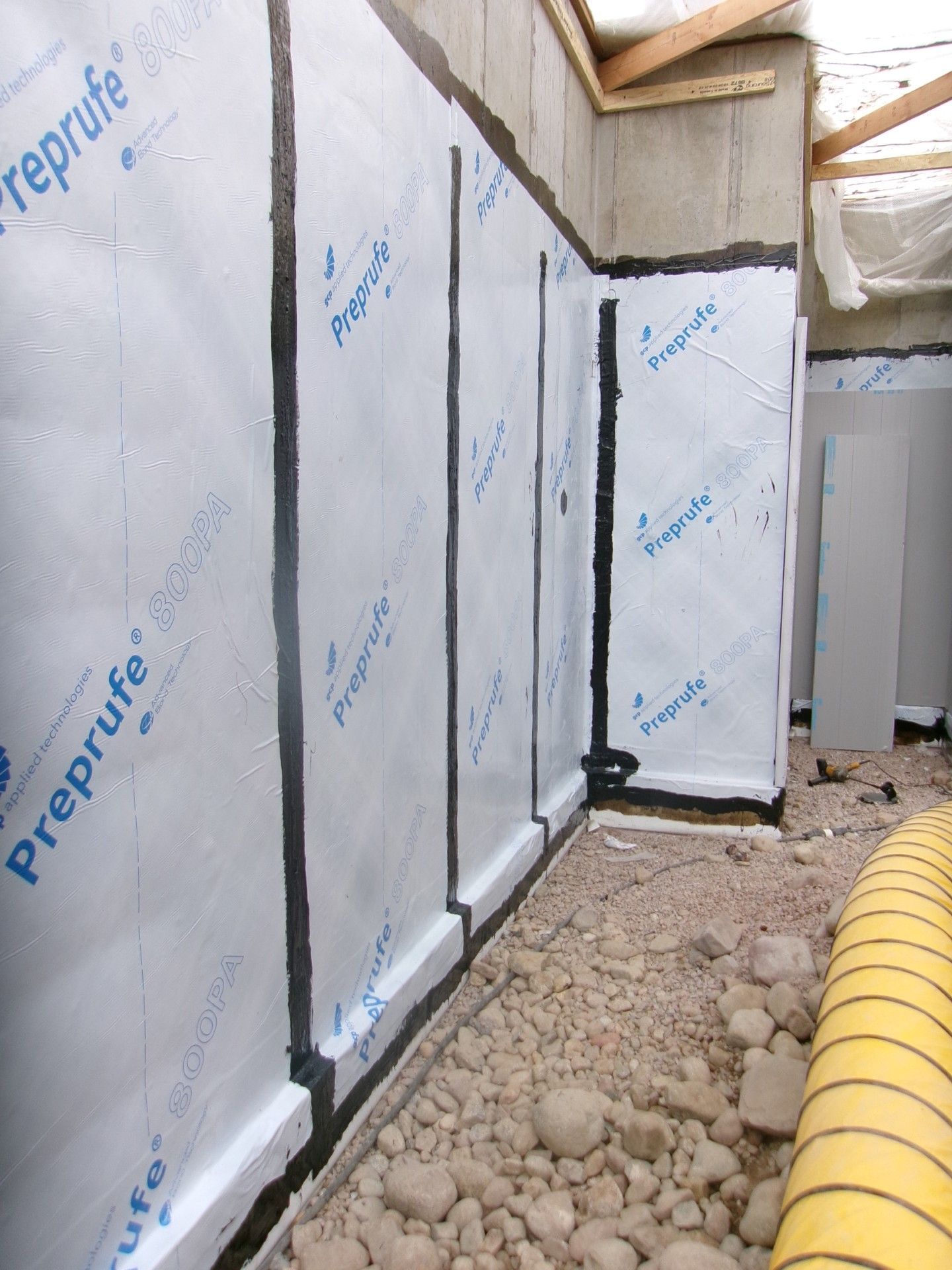
Air barrier systems help stop unwanted air and moisture from leaking in or out of a building. By sealing these leaks, they make buildings more energy-efficient and comfortable.
Air barriers come in different types:
- Some allow moisture vapor to pass through, while others block it completely.
- They can be applied as peel-and-stick sheets or as liquid coatings that dry into a solid layer.
These air and vapor barriers are installed on the outside of a building and stick well to many common building materials, such as:
- Masonry
- Concrete
- Stone
- Wood
- Gypsum board
- Metal
In short, air barriers act like a protective skin around a building, keeping air and moisture where they belong.
BLINDSIDE WATERPROOFING
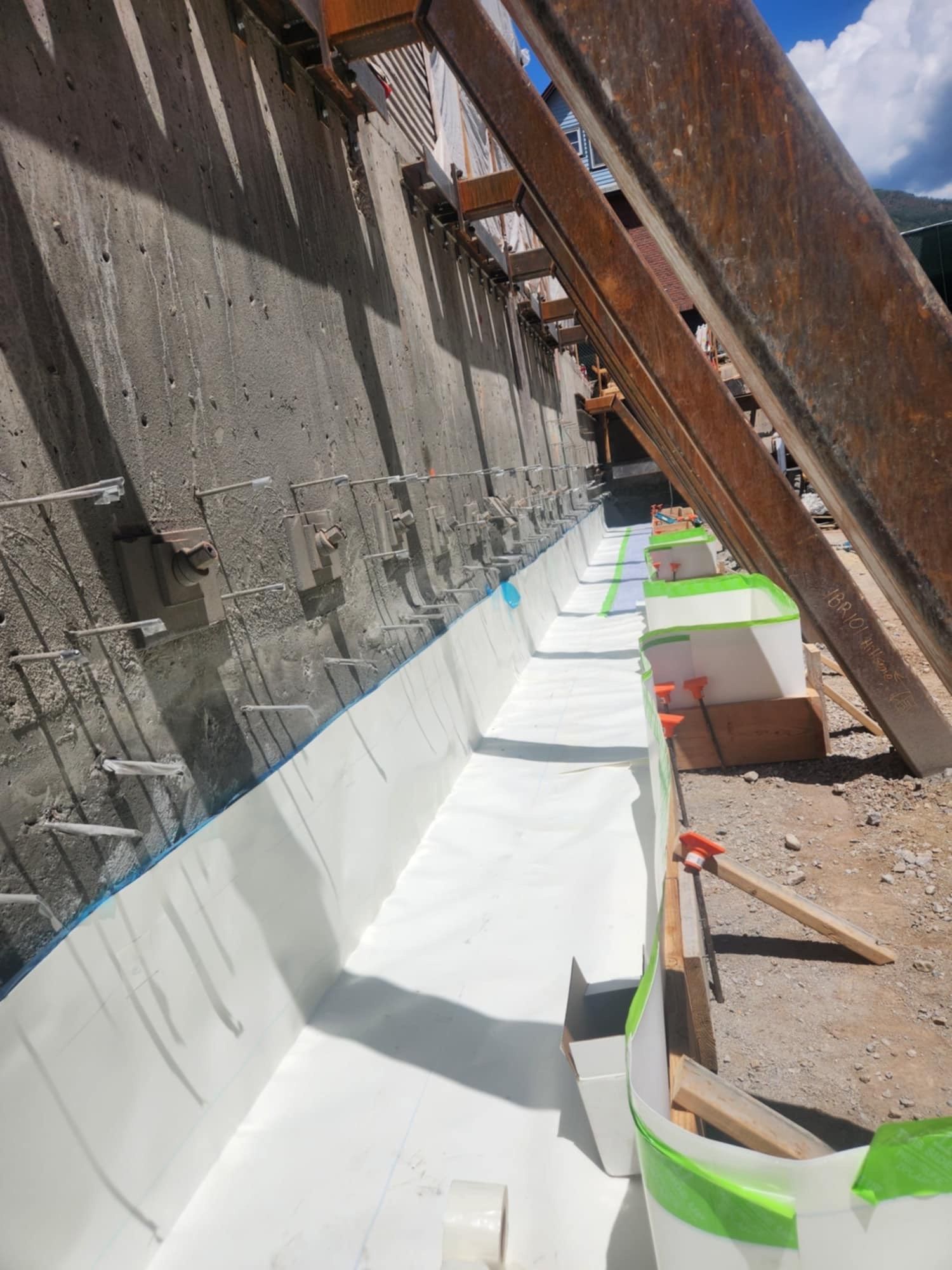
Blindside waterproofing is a method used to protect basements and foundations from water before the concrete is poured. These waterproofing membranes are installed by professionals and are designed to bond chemically with the concrete once it is placed.
The membranes are applied before the foundation walls or floor slabs are poured. This is especially useful when there is no space to waterproof the outside of the foundation later.
Blindside waterproofing can be used:
- Against temporary walls or soil support systems before concrete is poured
- On foundation walls made with poured concrete or shotcrete
- Under floor slabs in areas close to the groundwater level
- On buildings constructed right up to the property line with no extra space around them
In short, blindside waterproofing seals the foundation from water in tight spaces where traditional waterproofing methods cannot be used.
CAULKING AND SEALANTS
Caulking and sealants are used to fill and seal gaps where two building materials meet. They work on both similar and different materials and help prevent water from getting through.
These products are made to stay flexible, so they can move as the building shifts while still keeping the joint watertight.
Caulking and sealants come in many types, including:
- One-part or two-part systems
- Polyurethane sealants
- Silicone sealants
- Specialty sealants for specific needs
There are also options designed for special conditions, such as:
- Textured finishes
- Self-leveling for flat surfaces
- Fast-curing products
- High-performance and chemical-resistant sealants
Caulking and sealants can be applied to both horizontal and vertical surfaces, including:
- Control joints
- Masonry joints
- Metal
- Glass (glazing)
- Vinyl and plastic
- Wood
In short, caulking and sealants seal gaps, allow movement, and keep water out of buildings.
CEMENTIOUS WATERPROOFING
Cementitious waterproofing is a special chemical treatment used to protect, repair, and waterproof concrete and masonry structures.
One major benefit is that it can stop active water leaks, even when the surface is wet. The process usually includes:
- Cutting and preparing a small groove (called a reglet) at the bottom of walls and at construction joints
- Installing the waterproofing material into the groove
- Applying a cement-based slurry coating over the entire wall surface
Cementitious waterproofing can be used on both new and existing buildings. It is applied to the inside (negative side) of concrete or masonry, where water pressure is pushing from the outside.
Once applied, the material reacts with the concrete and forms tiny crystals inside the pores of the concrete. These crystals block water from passing through while still allowing the structure to breathe. Most cementitious waterproofing products are non-toxic and approved for use with drinking water.
Cementitious waterproofing can be used on both horizontal and vertical surfaces, including:
- Water treatment plants
- Underground vaults
- Secondary containment areas
- Foundations
- Tunnels
- Elevator pits
- Pools and water storage tanks
In short, cementitious waterproofing seals concrete from the inside and stops water leaks by becoming part of the structure itself.
COLD FLUID APPLIED
Cold fluid applied waterproofing is a liquid waterproofing system that is applied without heat. Once it cures, it forms a single, seamless layer that fully sticks to the surface, leaving no joints or overlaps where water can leak through.
These products come in different types:
- Single-component systems
- Two-component or multi-component systems
- Reinforced or non-reinforced membranes
Depending on the product and project needs, the waterproofing can be applied using:
- Spray equipment
- Rollers
- Squeegees
- Trowels
The waterproofing layer is usually applied at a thickness of about 60 or 90 mils (roughly the thickness of a credit card). Many of these products can be applied to fresh (green) concrete, which helps speed up construction by reducing waiting time.
Cold fluid applied waterproofing can be used on both flat and vertical surfaces, such as:
- Roof decks
- Plaza decks
- Parking garages
- Split slab areas
- Foundation walls
- Tunnels
- Planters
For flat surfaces, the waterproofing system is often tested by temporarily flooding the area with water to make sure there are no leaks.
In short, cold fluid applied waterproofing creates a seamless, durable barrier that protects many types of building surfaces from water.
CRACK/EPOXY INJECTIONS
Crack injection waterproofing is a method used to repair cracks in concrete and stop water leaks. There are different types of injection materials, each used for a specific purpose.
Common crack injection options include:
- Epoxy injections – A hard material that bonds strongly to concrete and restores structural strength to cracked areas.
- Hydrophobic polyurethane injections – A flexible material that reacts with water to expand and seal leaking cracks and empty spaces in the concrete.
One major advantage of crack injection waterproofing is that repairs can often be done from inside the building, which means there is no need to dig around the foundation. This saves time, reduces cost, and minimizes disruption.
In short, crack injection waterproofing fixes concrete cracks from the inside and provides a long-lasting solution to stop water intrusion.
WATER REPELLENTS
Water repellents are protective coatings that soak into surfaces and help keep water and other harmful substances out. They protect against moisture, chemicals, freeze–thaw damage, oils, and even graffiti.
These products are usually applied by spraying or rolling them onto the surface. There are many types available, so the right product can be chosen based on the building and the material being treated. Low-VOC options are also available, making them safer for people nearby and better for the environment.
Water repellents can be applied to both horizontal and vertical surfaces, including:
- Parking garages
- Bridges
- Stadiums
- Cast-in-place concrete
- Precast concrete
- Brick and concrete block (CMU)
- Maintenance facilities
- In short, water repellents protect concrete and masonry surfaces by keeping moisture and contaminants out while preserving the appearance of the structure.
DAMPPROOFING
Dampproofing is a basic waterproofing method used to protect foundations from moisture in the soil. It creates a smooth, seamless coating that helps keep dampness from passing through concrete or masonry walls.
These coatings are mainly used on below-grade walls where the space on the other side of the wall is not occupied, such as soil or utility areas. Common uses include site walls, stem walls, and masonry walls.
Dampproofing can be applied in several ways:
- Sprayed on
- Rolled on
- Brushed on
The coating is usually applied at a thickness of 10, 20, or 30 mils. Many dampproofing products can be applied to fresh (green) concrete, which helps speed up construction.
Dampproofing is typically used on vertical surfaces such as:
- Below-grade concrete foundation walls
- Below-grade CMU (concrete block) walls
- Above-grade cavity walls
- Retaining walls
In short, dampproofing provides moisture protection for foundation walls but is not intended to resist heavy water pressure like full waterproofing systems.
DRAINAGE COMPOSITES
Drainage composites are materials used along with waterproofing membranes to help protect structures and move water away from them. They work on both flat and vertical surfaces.
These systems are made of a strong, crush-resistant drainage core that creates space for water to flow. The core is covered with special fabric on one or both sides. This fabric lets water pass through but keeps soil and debris from clogging the system.
Drainage composites help:
- Reduce water pressure against walls and slabs
- Move water away from the structure
- Protect the waterproofing membrane
They come in different sizes, thicknesses, strengths, and fabric types to match the needs of each project.
Drainage composites can be used on many surfaces, including:
- Roof decks
- Plaza decks
- Split slab areas
- Vertical foundation walls
- Tunnels
- Planters
- Lagged foundation walls
- Retaining walls
In short, drainage composites work with waterproofing systems to control water, protect membranes, and prevent pressure-related damage.
EXPANSION JOINTS
Expansion joints are special gaps or assemblies built into structures to allow parts of a building to move without cracking or breaking. They absorb movement caused by things like:
- Changes in temperature (thermal expansion and contraction)
- Earthquakes or ground shifts (shear and seismic movement)
- Wind sway
- Vibrations
- Heavy loads
Expansion joints are used in many types of buildings, such as parking garages, stadiums, plaza decks, airports, hospitals, high-rises, and shopping malls.
They are designed with different features depending on the project needs, including:
- Waterproof – stops water from getting through the joint
- ADA compliant – smooth and safe for wheelchairs and pedestrians
- Fire rated – resists fire for safety
- Handles thermal, seismic, and shear movement
- No-bump and heavy-load designs – safe for vehicles and heavy traffic
- Aesthetic finishes – looks good while functioning
In short, expansion joints let buildings move safely while keeping water out and maintaining durability and safety.
GARDEN ROOF SYSTEMS
Garden roofs, also called green roofs, are rooftops designed to grow plants. They create “green” spaces that provide many benefits, such as:
- Extra usable space on the roof
- Attractive appearance
- Earning LEED points for environmentally friendly design
- Helping manage rainwater
- Increasing property value
A garden roof system is carefully designed so plants can grow while keeping the building underneath completely watertight.
Common components of a garden roof include:
- Protection Course / Root Barrier – prevents roots from damaging the roof
- Insulation – helps with energy efficiency
- Drainage Composite – allows excess water to flow away
- Water Retention Mat – holds water for the plants
- Aggregate – stones or gravel for weight, drainage, or aesthetic purposes
- Filter Fabric – keeps soil in place while letting water pass through
In short, garden roof systems let you create a rooftop garden without letting water leak into the building.
HOT FLUID APPLIED
Hot fluid applied waterproofing is a type of liquid waterproofing that creates a seamless, fully bonded layer over a surface.
The material starts as a solid block, which is heated until it melts and then applied with a roller or squeegee. Once it cools, it forms a strong, durable, waterproof membrane.
Key features:
- Can be reinforced with fabric or used without reinforcement
- Seams and joints are specially reinforced using fabric or uncured neoprene for extra strength at critical areas
- Provides some of the longest warranties in the waterproofing industry
This system can be applied to both flat and vertical surfaces, including:
- Roof decks
- Plaza decks
- Parking garages
- Split slab areas
- Foundation walls
- Tunnels
- Planters
For flat surfaces, the waterproofing is often flood-tested with water or electronically tested to ensure there are no leaks.
In short, hot fluid applied waterproofing creates a strong, seamless, and long-lasting barrier to protect buildings from water.
INSULATION AND PROTECTION
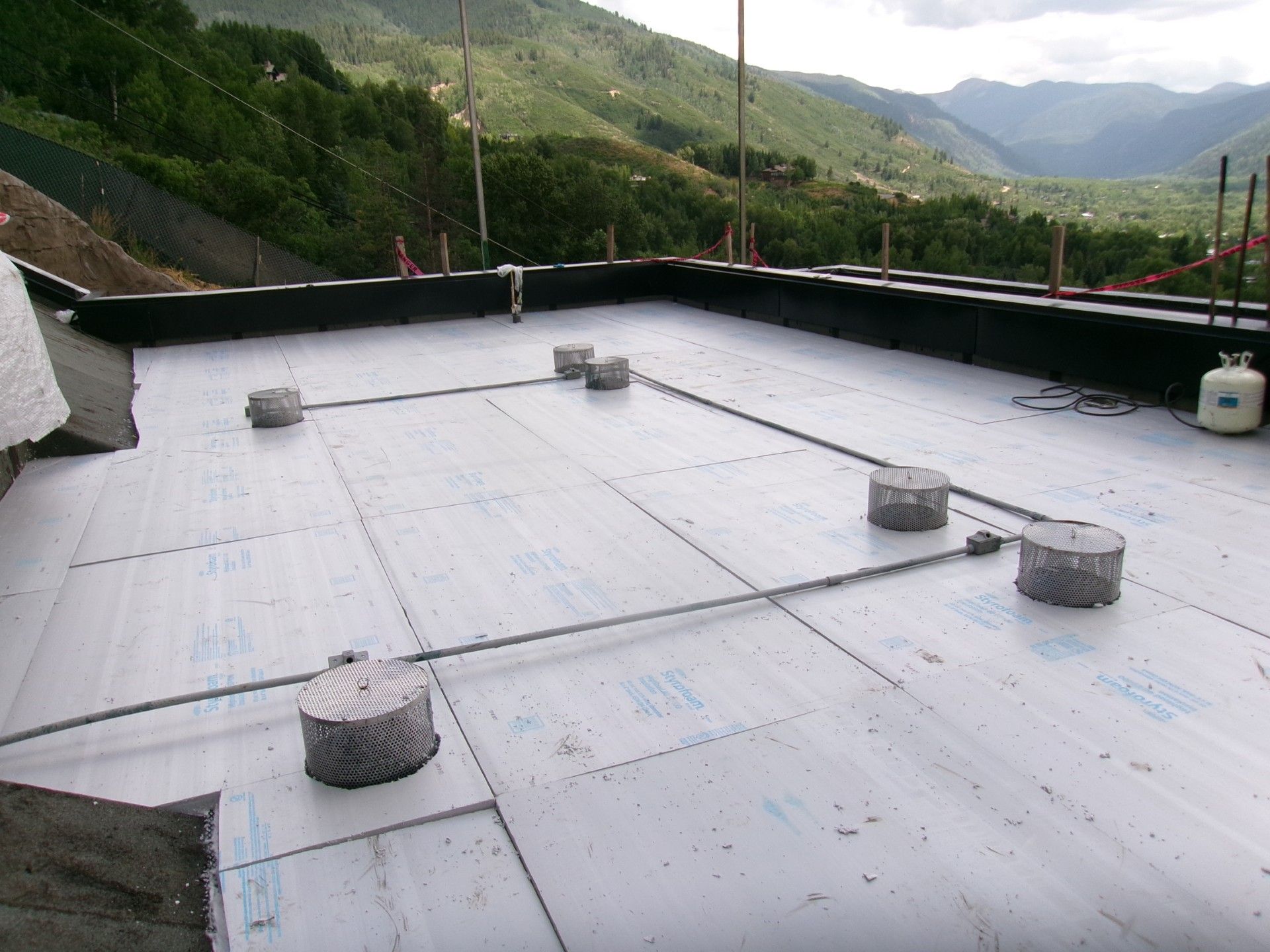
Insulation and protection boards are materials used to protect waterproofing membranes and provide thermal insulation for foundations, basements, and other parts of a building. They also help increase energy efficiency by adding R-value (resistance to heat flow).
These boards come in different materials and thicknesses, such as:
- Extruded Polystyrene (XPS) – strong, water-resistant, R-5 per inch, compressive strength 25–100 PSI
- Expanded Polystyrene (EPS) – lighter, R-4 per inch, compressive strength 10–60 PSI
- Asphaltic protection boards
- Rolled roofing protection course
- Fiberglass boards
Other uses include:
- Foam fill (EPS) – used instead of dirt or concrete to reduce weight on a structure
- Tapered insulation boards – used to level floors and create proper slope for drainage
Protection boards and insulation can be applied to both horizontal and vertical surfaces, such as:
- Roof decks, plaza decks, and split slab assemblies
- Foundation walls
- Under slabs
- Void fill areas
- Floor leveling and slope building
- Soundproofing
- Green roof landscaping
- Retaining walls (to reduce lateral load)
In short, these boards
protect waterproofing layers, provide insulation, and help manage structural loads, making buildings more durable and energy-efficient.
PAVERS
Concrete pavers are often used on plaza decks, terraces, and green roofs to create attractive, functional outdoor spaces. They come in many sizes, colors, and finishes.
When installed on an elevated pedestal system, pavers offer several benefits:
- Drainage: Water flows freely under the pavers, protecting the waterproofing layer below
- Level surface: Adjustable pedestals allow a flat, even surface even on sloped decks
- Easy access: Pavers can be removed later to inspect or repair the waterproofing system
- Aesthetic appeal: Looks great and enhances the outdoor space
- LEED points: Can contribute to environmentally friendly building certifications
In short, pavers not only create a beautiful, usable outdoor space but also
protect the waterproofing system and make maintenance easier.
SHEET MEMBRANE
Sheet membrane waterproofing comes as rolls of self-adhesive rubberized asphalt with a protective polyethylene layer. These membranes are factory-made, which means their thickness is consistent and predictable, unlike some materials applied on site.
To use, the protective release paper is peeled off, and the membrane is stuck directly onto the surface. They can be applied to many materials, including concrete, masonry, and wood, and are available in summer or winter grades to suit different weather conditions.
Sheet membranes can be used on both flat and vertical surfaces, such as:
- Foundation walls
- Tunnels
- Split slab construction
- Planters
- Plaza decks
- Balcony decks
In short, sheet membrane waterproofing provides a
reliable, uniform barrier that protects buildings from water penetration on many types of surfaces.
VAPORS BARRIERS
Vapor barriers are materials that stop moisture and gases from passing through a building’s floor. They are strong, puncture-resistant sheets that come in thicknesses from 6 mils to 20 mils.
When installed, all seams are taped and any floor penetrations (like pipes) are sealed, creating a complete barrier. This keeps moisture, water vapor, and soil gases out of the building, which helps prevent mold and damage.
Vapor barriers are usually applied under the floor before the floor is installed, in places such as:
- Slab-on-grade floors
- Raised wood floors
- Crawl spaces
In short, vapor barriers
protect floors and indoor spaces from moisture and harmful gases, keeping the building safe and healthy.